
Table of Contents
- 1. What Does Converting a Credit Card Bill to EMI Mean?
- 2. Eligibility and Charges for Credit Card EMI Conversion
- 3. How to Convert Credit Card Bill to EMI
- 4. Can You Convert Credit Card Bill to EMI After Bill Generation?
- 5. Things to Know Before Converting Your Credit Card Bill to EMI
- 6. Convert Smarter with BOBCARD Smart EMI
- 7. Frequently Asked Questions
Converting your credit card bill or a large transaction to EMI is one of the most effective ways to manage a payment you cannot clear in one billing cycle without paying the full revolving interest rate of 36% to 45% per annum. EMI conversion locks in a significantly lower rate, typically 12% to 20% per annum, and spreads the repayment into predictable monthly instalments.
Note: BOBCARD Eterna & Tiara: 3.25%/month (39% p.a.); all
other BOBCARD variants: 3.75%/month (45% p.a.) per MITC Ver 19.
This guide covers every major bank's EMI conversion process step by step, the charges to expect, the critical rules around post-bill-generation conversion, and the specific Smart EMI facility available on BOBCARD.
What Does Converting a Credit Card Bill to EMI Mean?
When you convert a credit card transaction or outstanding balance to EMI, your bank removes the lump sum from your standard outstanding and creates a structured loan in its place. You pay a fixed EMI amount every month for the chosen tenure. Each EMI comprises a principal component and an interest component calculated at the EMI rate (typically 12% to 20% per annum on a reducing balance). The outstanding principal is blocked against your credit limit until each instalment is paid off.
The core benefit is the rate reduction: instead of 36% to 45% per annum on a revolving balance, EMI conversion charges 12% to 20% per annum on a structured reducing balance, saving significant interest cost on large or long-duration repayments.
Transaction EMI vs Outstanding Bill EMI: What Is the Difference?
Transaction EMI (also called Post Purchase EMI) converts a specific retail purchase transaction on your credit card into an EMI plan. This is done before the bill for that transaction is generated. The transaction amount is removed from the upcoming bill and converted to monthly instalments billed separately.
Outstanding Bill EMI (also called Balance EMI or existing outstanding conversion) converts the total outstanding balance on your statement, or a portion of it, into an EMI plan after the bill has been generated. This is typically used when you receive your bill and realise you cannot clear it in full. The rules, charges, and eligibility conditions differ between these two types, and this guide covers both.
No-Cost EMI vs Regular EMI: Which One Is Better?
A regular EMI charges an explicit interest rate (12% to 20% per annum) and may also include a processing fee. The total cost is transparent and calculable. A no-cost EMI appears to charge zero interest because the merchant or brand subsidises the interest component, effectively offering an upfront discount equivalent to the interest amount. The cardholder pays only the original price in equal instalments.
From a pure cost perspective, no-cost EMI is better since the effective rate is zero. However, no-cost EMI comes with specific conditions: it is available only on select products from participating merchants, only for certain tenures, and only during active promotional campaigns. For transactions not eligible for no-cost EMI, a regular EMI at 12% to 20% per annum is significantly cheaper than letting the amount revolve at 36% to 45% per annum.
Eligibility and Charges for Credit Card EMI Conversion
Minimum Transaction Amount Required for EMI Conversion
Most banks set a minimum transaction amount below which EMI conversion is not available. The standard across the industry is Rs 2,000 to Rs 5,000:
| Bank | Minimum Transaction for EMI | Product Name |
|---|---|---|
| BOBCARD | Rs 2,500 (Post Purchase EMI) | Smart EMI |
| HDFC Bank | Rs 2,000 to Rs 3,000 | SmartEMI |
| SBI Card | Rs 2,000 | Flexipay |
| ICICI Bank | Rs 2,500 | EMI on Call |
| Axis Bank | Rs 2,500 | Easy EMI |
| Kotak Bank | Rs 2,500 | EasyEMI |
| RBL Bank | Rs 2,500 | EasyEMI |
Processing Fee, Interest Rate and Pre-Closure Charges
Credit card EMI conversion involves three cost components: an interest rate on the EMI tenure, a processing fee at the time of conversion, and pre-closure charges if you want to close the EMI early.
| Bank | EMI Interest Rate | Processing Fee | Pre-Closure Charge |
|---|---|---|---|
| BOBCARD (Post Purchase) | 18% p.a. (reducing balance) | 2% of transaction amount (min Rs 100) | 3% of principal outstanding + pro-rata interest + GST |
| BOBCARD (Instant EMI at merchant) | Flat 16% p.a. | Rs 99 to Rs 999 + GST | As per card terms |
| HDFC SmartEMI | 12% to 24% p.a. | 1% to 2% of amount (min Rs 199) | Typically 3% of outstanding + GST |
| SBI Flexipay | 12% to 20% p.a. | Nil to 2% depending on offer | 3% of outstanding + GST |
| ICICI EMI on Call | 12% to 24% p.a. | Nil to 1.5% | 3% of outstanding + GST |
| Axis Bank Easy EMI | 12% to 24% p.a. | 1.5% (min Rs 199) | 3% of outstanding + GST |
All fees and interest components attract 18% GST on top of the stated amount. Pre-closure is allowed on most EMI plans but carries a charge, so only pre-close if the savings in future interest clearly justify the pre-closure fee.
Reward Points Reversal on EMI Conversion: What You Lose
This is one of the most overlooked consequences of EMI conversion. When you convert a purchase transaction to EMI, most banks reverse the reward points or cashback that were initially earned on that transaction.
For BOBCARD, reward points earned on a transaction converted to EMI under the Smart EMI programme may be adjusted. Always check your card's rewards terms before converting a high-value transaction to EMI, particularly if the transaction earned accelerated points (e.g., 5X or 10X reward categories). The interest saved by EMI conversion usually outweighs the lost reward points on large amounts, but it is worth calculating for smaller transactions.
GST on Credit Card EMI: What Is Applicable
GST at 18% is applicable on the processing fee and on the interest component of each EMI instalment. This means your effective EMI cost is 18% higher than the stated interest rate and processing fee suggest. For example, a processing fee of Rs 299 becomes Rs 352.82 after GST. The interest charged each month on the outstanding principal also carries 18% GST. This is an additional cost that many cardholders miss when comparing EMI rates across banks or against alternative financing.
How to Convert Credit Card Bill to EMI
BOBCARD Credit Card Bill to EMI: Steps and Charges
BOBCARD offers its EMI conversion facility under the brand name Smart EMI, which has three options: Post Purchase EMI, Instant EMI (at merchant), and No Extra Cost EMI (at select merchants during promotions).
Post Purchase EMI (most commonly used for bill conversion):
- Log in to the customer portal at online.bobcards.com or open the BOBCARD App
- On the customer portal, click the SERVICE REQUEST tab
- From the dropdown, select EMI REQUEST
- On the BOBCARD App, go to TRANSACTIONS and select the transaction to convert
- Select the transaction(s) you wish to convert to EMI (minimum Rs 2,500 per transaction)
- Choose your EMI tenure: 6, 12, 18, 24, 36, or 48 months
- The system automatically calculates and displays the monthly EMI amount
- Click Submit and accept the Terms and Conditions popup
- A confirmation window appears and an automated email with the Request ID is sent to your registered email address
Important rules for BOBCARD Smart EMI:
- Only unbilled transactions can be converted to Post Purchase EMI (transactions that have not yet appeared on a generated statement)
- The transaction must reflect in the portal within 2 days from the date of transaction before you can request conversion
- Minimum transaction amount: Rs 2,500
- Transactions on gold, jewellery, fuel, and cash are not eligible for EMI conversion
- Processing fee: 2% of the transaction amount, subject to a minimum of Rs 100, plus applicable GST
- Pre-closure charge: 3% of the principal outstanding on the closure date plus pro-rata interest from the last EMI date plus GST
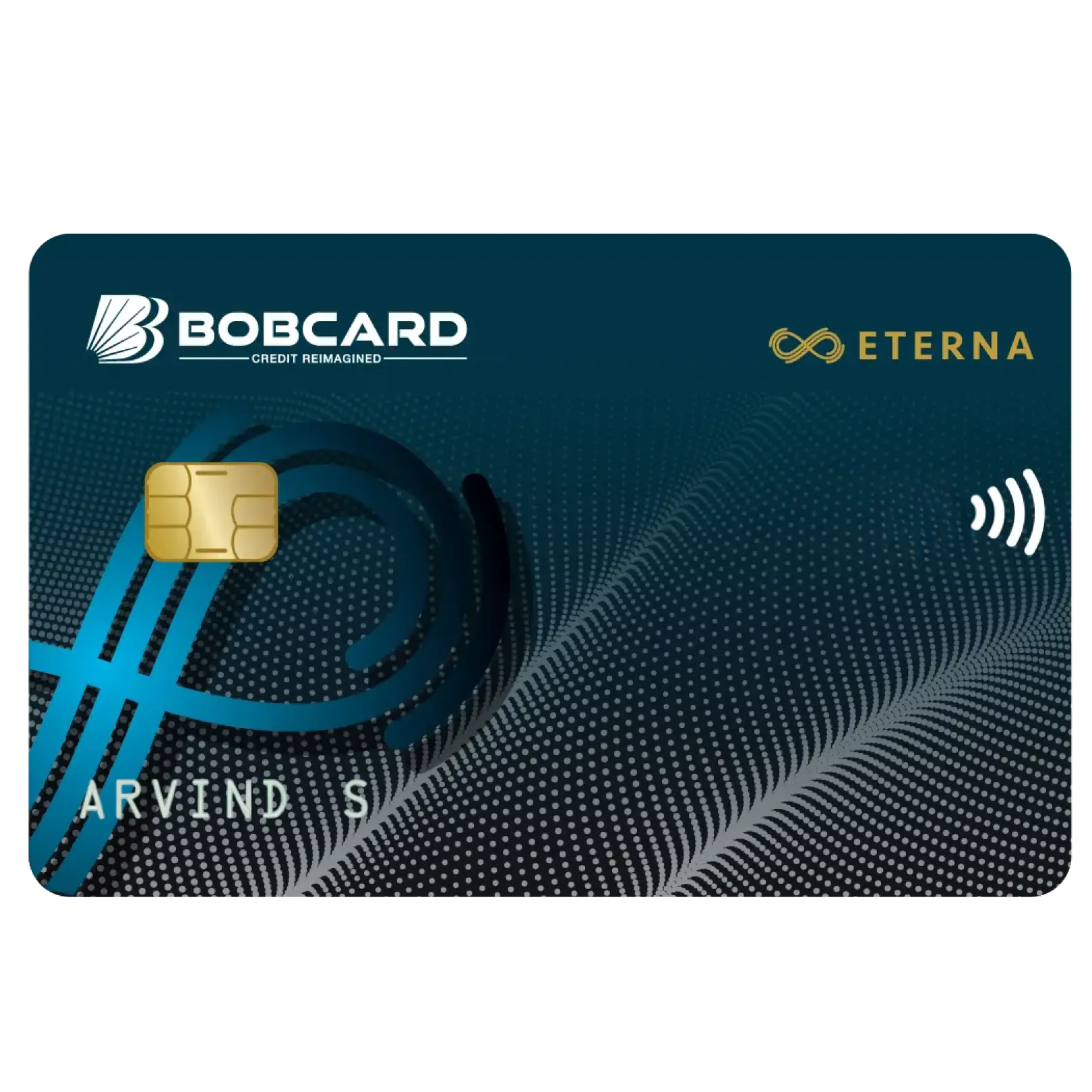
For Instant EMI (at a merchant outlet at the time of purchase): the interest rate is a flat 16% per annum; processing fee is Rs 99 to Rs 999 plus applicable taxes; tenures available are 2 to 36 months. Instant EMI does not require a subsequent conversion request; the merchant processes the EMI at the time of sale.
Can You Convert Credit Card Bill to EMI After Bill Generation?
Yes: Most Banks Allow Post-Bill EMI Conversion with Conditions
The good news is that most major banks in India allow you to convert outstanding amounts to EMI after your bill has already been generated, not just for unbilled transactions. This is called outstanding balance EMI conversion or post-statement EMI conversion, and it directly addresses the situation where you receive your bill and realise you cannot pay it in full.
For BOBCARD, the standard Post Purchase EMI facility covers only unbilled transactions. For post-bill outstanding, cardholders should contact BOBCARD customer care to enquire about available options for converting the billed outstanding to a structured repayment plan.
Time Limit: How Many Days After Bill Generation Can You Convert?
The conversion window after bill generation varies by bank. Always check your specific bank's app for the conversion window applicable to your card.
Step-by-Step: How to Convert Existing Outstanding to EMI
- Log in to your bank's mobile app or net banking
- Navigate to Credit Cards then Bill Summary or Current Outstanding
- Look for a Convert to EMI or EMI on Outstanding option
- Select the amount to convert (full outstanding or a specific portion)
- Choose the tenure and review the EMI schedule, interest rate, processing fee, and total cost
- Confirm with OTP; the outstanding is restructured and your next statement will reflect the EMI deduction
Things to Know Before Converting Your Credit Card Bill to EMI
EMI Blocks Your Credit Limit: Plan Available Balance Carefully
When a transaction is converted to EMI, the entire transaction amount continues to be blocked against your credit limit until each instalment is paid off. For example, if your credit limit is Rs 1,00,000 and you convert a Rs 40,000 purchase to 12-month EMI, Rs 40,000 of your limit remains blocked for 12 months, leaving you only Rs 60,000 in effective available credit. As each EMI is paid, the blocked amount reduces proportionally. Plan your EMI conversions with this credit headroom impact in mind.
Always Compare EMI Interest vs Credit Card Interest Before Converting
EMI conversion is not always the right choice for every transaction or balance. If you can clear the outstanding within 1 to 2 billing cycles from your regular income, the total interest paid on revolving credit for that short period may be lower than the processing fee plus EMI interest for a longer tenure. Run the numbers: revolving interest on Rs 20,000 at 42% per annum for 2 months is approximately Rs 1,400 plus GST. A 6-month EMI on the same amount at 18% per annum with a 2% processing fee (Rs 400) totals approximately Rs 1,280 in interest plus Rs 400 fee plus GST, making the EMI marginally cheaper but not dramatically so for short periods. For large amounts or longer repayment durations, EMI is significantly cheaper.
Pre-Close EMI Only If Savings Justify the Pre-Closure Fee
If you receive a lump sum (bonus, incentive, or other windfall) and want to close your EMI early, calculate whether the pre-closure fee is less than the remaining interest you would pay over the tenure. The pre-closure charge across all major banks is approximately 3% of the remaining principal plus GST. If the remaining tenure is short (1 to 2 months), the interest saved by pre-closing may be lower than the pre-closure fee itself, making pre-closure financially counterproductive. For BOBCARD, the pre-closure charge is 3% of principal outstanding on the closure date plus pro-rata interest from the last EMI date plus GST.
Never Miss an EMI: Impact on CIBIL Score Is Immediate
Missing an EMI payment on a credit card EMI plan is treated identically to missing a regular credit card bill payment. The bank marks the missed amount as overdue, applies late payment charges, and reports the delinquency to credit bureaus in the monthly reporting cycle. CIBIL tracks EMI repayment as part of your credit card payment history, and a single missed EMI can result in a DPD entry that reduces your score by 50 to 80 points. Set up auto-pay or calendar reminders specifically for your EMI due date to ensure uninterrupted repayment throughout the tenure.
Convert Smarter with BOBCARD Smart EMI
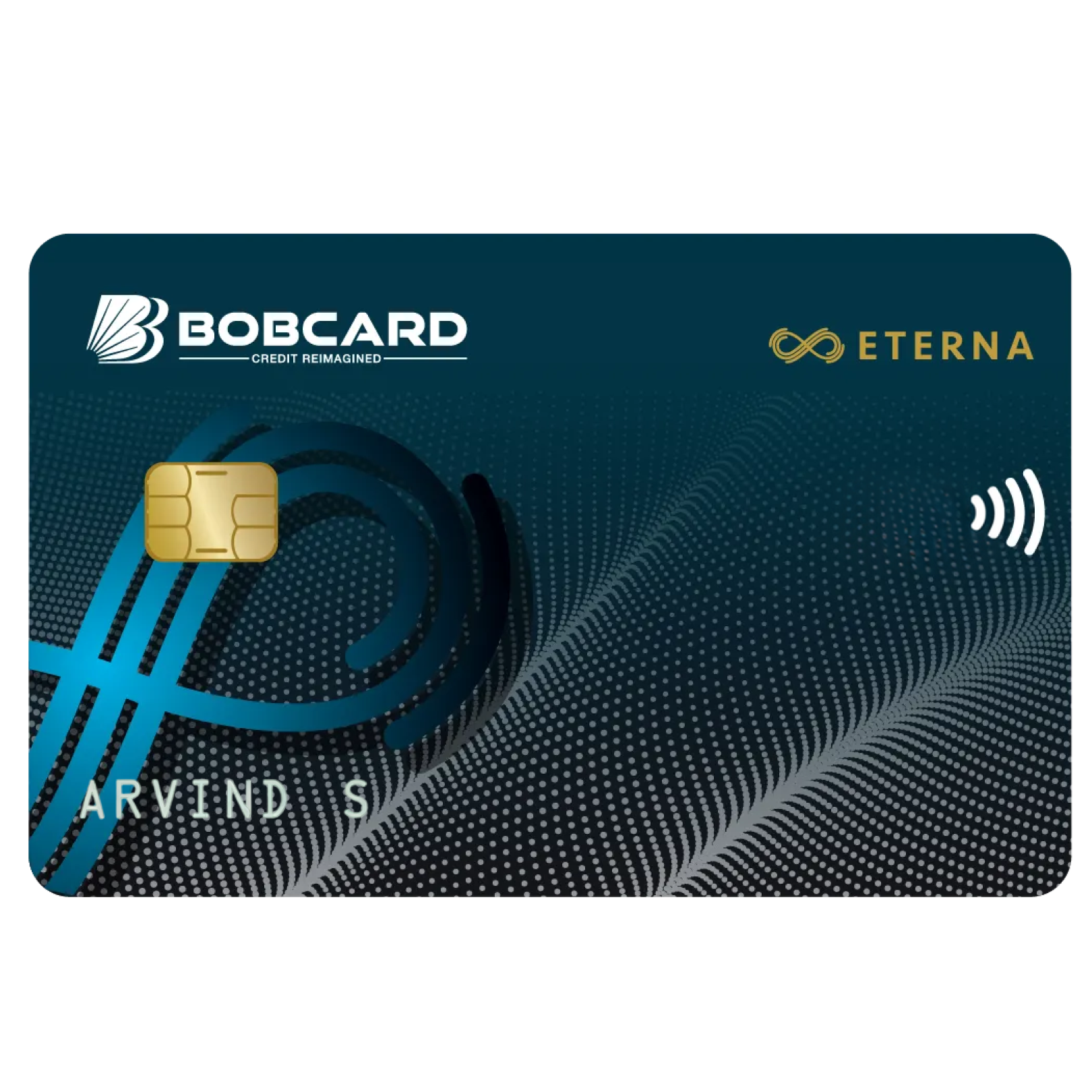
BOBCARD's Smart EMI gives you three ways to convert large purchases into manageable monthly payments: Post Purchase EMI for any retail transaction above Rs 2,500 (with flexible tenures from 6 to 48 months), Instant EMI at merchant outlets at the time of purchase (flat 16% p.a., 2 to 36 month tenures), and No Extra Cost EMI on select products and promotions.
Note: BOBCARD's standard interest-free period is 20
to 50 days. Once this lapses without full payment, revolving interest applies
at 3.25%/month (Eterna/Tiara) or 3.75%/month (other variants).
Instead of paying revolving interest at the full revolving rate, Smart EMI converts your purchase into a structured, lower-rate repayment plan that fits your monthly cash flow. Manageable payments. Lower interest. No financial stress.
Apply for BOBCARD today and access Smart EMI on every eligible purchase from day one.
Frequently Asked Questions
Disclaimer
The information in this blog is for general educational and informational purposes only. All EMI interest rates, processing fees, pre-closure charges, eligibility criteria, and step-by-step processes cited are based on publicly available information as of the date of publication. BOBCARD Smart EMI details are based on published product terms on bobcard.co.in. Rates and charges are subject to change at the discretion of the issuing bank. Bank-wise steps and charges for HDFC, SBI, ICICI, Axis, Kotak, RBL, IndusInd, and YES Bank are indicative; verify current terms with the respective bank before initiating an EMI conversion. GST at 18% applies to all processing fees and interest components. Transactions on gold, jewellery, fuel, and cash are universally ineligible for EMI conversion. This content does not constitute financial advice. Readers are advised to refer to the Most Important Terms and Conditions (MITC) available at bobcard.co.in.