
Table of Contents
- 1. Credit Card Interest Calculation Formula: Annual Rate (APR) to Daily Rate
- 2. Credit Card Interest Calculation Example (India)
- 3. Interest on Cash Withdrawals and Partial Payments
- 4. How to Avoid Paying Credit Card Interest
- 5. Know Your Numbers. Pay Zero Interest. Apply for BOBCARD Today.
- 6. Frequently Asked Questions
Credit card interest is one of the most expensive forms of consumer debt in India, yet very few cardholders know exactly how it is calculated. The formula is: Finance Charge = Outstanding Balance x (APR / 365) x Number of Days. Applied at 42% per annum, this means Rs 1,00,000 left unpaid for 30 days generates approximately Rs 3,452 in interest before GST. Knowing this number, and knowing how to avoid it, is the most valuable credit card literacy you can have.
This guide explains the calculation step by step, with a complete worked example, the GST layer most people miss, and practical ways to make sure this formula never applies to your account.
Credit Card Interest Calculation Formula: Annual Rate (APR) to Daily Rate
Credit card interest in India is calculated on a daily basis using the average daily balance method. To apply the daily rate, you first convert your card's Annual Percentage Rate (APR) to a daily periodic rate:
This daily rate is then multiplied by each day's outstanding balance to arrive at the daily interest amount. These daily amounts are summed across the billing cycle to produce the total finance charge for that period. Most banks in India charge between 3% and 3.75% per month. BOBCARD charges up to 3.00% per month (36% per annum), which is at the competitive end of the mainstream market.
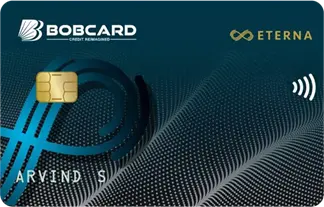
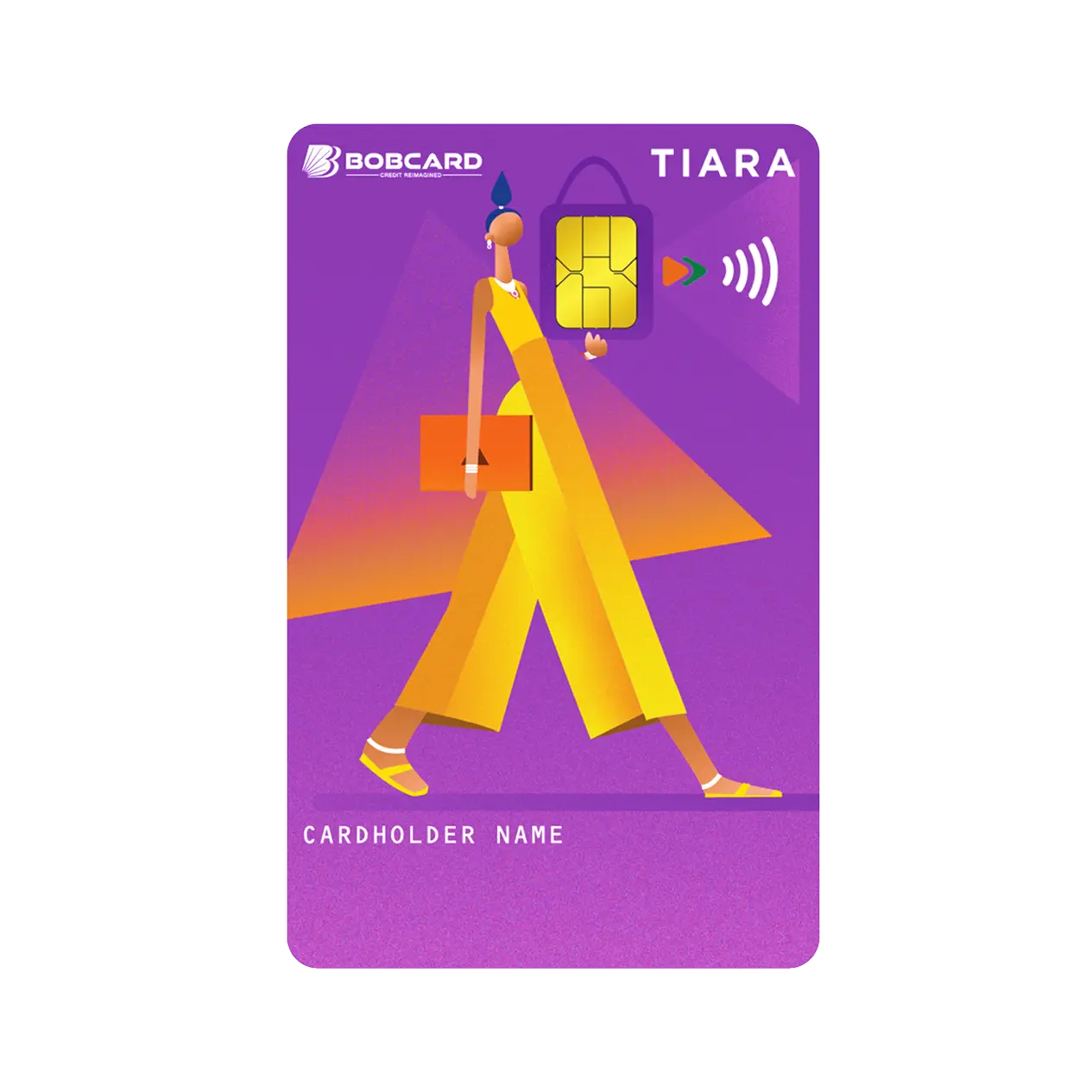
Note: BOBCARD Eterna and Tiara charge 3.25% per month
(39% per annum). All other BOBCARD variants charge 3.75% per month (45% per
annum) per MITC Ver 19, effective 1 April 2026.
The Credit Card Interest Formula Explained Step by Step
The complete credit card interest formula used by Indian banks:
In practice, banks compute this individually for each transaction, since each purchase was made on a different date and therefore has a different number of days for which interest applies. The total finance charge is the sum of interest calculated on each transaction from its transaction date.
GST at 18% Is Added on Top of the Interest Amount
This is the element most online calculators and guides miss. All finance charges on credit cards in India attract Goods and Services Tax (GST) at 18%. The GST is applied on top of the calculated interest, not on the principal balance. This means the actual finance charge debited from your account is always 18% higher than the raw interest calculation suggests.
Total Finance Charge = Calculated Interest x 1.18 Example: Calculated interest = Rs 375 GST at 18% = Rs 67.50 Total charged = Rs 442.50
Credit Card Interest Calculation Example (India)
Example: Rs 10,000 Outstanding at 3.75% Per Month
Let us take a clear, single scenario: you have an outstanding balance of Rs 10,000 on your credit card. Your card charges 3.75% per month, which equals 45% per annum. You missed the full payment on the due date and are now calculating the interest for one complete billing cycle of 30 days.
What Does the Interest Cost After 30 Days?
This is the raw interest before GST. At first glance, Rs 370 on a Rs 10,000 balance may seem modest. But this amount accrues every 30 days. If only the minimum due is paid (typically 5%, which equals Rs 500), the remaining balance continues compounding, with the next cycle's interest calculated on a balance that has barely moved.
For comparison, on a BOBCARD with a rate of 3.00% per month (36% per annum), the same Rs 10,000 balance would accrue approximately Rs 296 in interest for 30 days before GST, which is Rs 74 less per cycle than the 3.75% example above. Over 12 months, this difference adds up to approximately Rs 888 in savings on a Rs 10,000 balance.
Total Payable Including GST
The total effective monthly cost of carrying Rs 10,000 at 45% per annum is approximately Rs 436, not Rs 370. GST on EMI is generally not included in upfront calculations and add over in statement directly. Over 12 months of continuous balance, this compounds significantly. The table below shows how the balance grows if only the minimum due (5%) is paid each month and no new purchases are made:
| Month | Opening Balance | Interest + GST | Minimum Paid (5%) | Closing Balance |
|---|---|---|---|---|
| Month 1 | Rs 10,000 | Rs 436 | Rs 500 | Rs 9,936 |
| Month 3 | Rs 9,870 (approx.) | Rs 431 | Rs 497 | Rs 9,804 |
| Month 6 | Rs 9,690 (approx.) | Rs 423 | Rs 487 | Rs 9,626 |
| Month 12 | Rs 9,320 (approx.) | Rs 407 | Rs 469 | Rs 9,258 |
After 12 months of making minimum payments, the balance has reduced by less than Rs 750, despite paying approximately Rs 5,600 over the year. This is the compounding debt trap that credit card minimum payments create, regardless of which card or bank you use.
Interest on Cash Withdrawals and Partial Payments
How Credit Card Cash Withdrawal Interest Is Calculated
Cash advances, which means withdrawing cash at an ATM using your credit card, use the same interest formula but with two critical differences: interest begins from the day of withdrawal (not the billing cycle start), and there is no interest-free period regardless of payment behaviour. Even if you pay the full outstanding by the due date, the cash advance balance accrues interest from day one at the same revolving credit rate. This rule applies universally across all types of credit cards in India.
Additionally, a cash advance fee (typically 2.5% of the amount, minimum Rs 250 to Rs 500 plus GST) is charged upfront on the day of withdrawal. On a Rs 5,000 ATM withdrawal, the cash advance fee is Rs 500 (minimum) plus Rs 90 GST, totalling Rs 590 upfront, and interest then accrues on the Rs 5,000 from day one.
Note: BOBCARD cash advance fee: 2.5% of amount or
₹500, whichever is higher, per MITC Ver 19.
Partial Payment: How Interest Is Split Across the Billing Cycle
When you make a partial payment (paying more than the minimum but less than the full outstanding), the bank applies the payment to your balance in a specific order, typically clearing fees and charges first, then the oldest purchase balances. Interest continues to accrue on any remaining unpaid portion from the original transaction dates.
There is no pro-rata relief. If you had Rs 20,000 outstanding and paid Rs 15,000, interest is calculated on the full Rs 20,000 for the portion of the cycle before your payment, and on the remaining Rs 5,000 from the payment date to the end of the cycle. The interest-free period is not restored until the balance is fully cleared.
How to Avoid Paying Credit Card Interest
Always Pay Total Due, Not Minimum Due, Before the Due Date
Paying the minimum due is the single most common and most expensive credit card mistake in India. The minimum due, typically 5% of the outstanding balance subject to a minimum floor, appears on your statement as a safe payment option. It is not. Paying only the minimum due forfeits the interest-free period, triggers retroactive interest on all transactions from their transaction dates, and creates a compounding balance that is extremely difficult to reduce through minimum payments alone. Always pay 100% of the total outstanding by the due date to pay zero interest.
Time Large Purchases Right After Your Statement Date
A purchase made immediately after your statement date benefits from the longest possible interest-free window, up to the full billing cycle length plus the payment window. For a 30-day billing cycle with a 20-day payment window, a purchase made on the day after the statement date gets up to 50 days interest-free. For planned large purchases, checking your billing cycle dates and timing the purchase to the cycle start maximises the interest-free window before the payment is due. BOBCARD cardholders can check their billing cycle dates through the BOB World app.
Convert High Spends to EMI to Cap Interest Cost
If you make a large purchase that you know you cannot repay in full within the billing cycle, converting it to an EMI plan immediately locks in a lower interest rate, typically 12% to 20% per annum for EMI versus 36% to 45% for revolving credit, and a structured, fixed repayment. Most banks, including BOBCARD, allow EMI conversion through the mobile app within 24 to 48 hours of a transaction. While EMI does carry an interest cost, it is significantly lower than letting the amount roll as revolving debt.
Know Your Numbers. Pay Zero Interest. Apply for BOBCARD Today.
The best outcome with any credit card is a finance charge of exactly Rs 0 every single month. BOBCARD is built to make that outcome easy, with clear monthly statements showing your total outstanding, real-time alerts for every transaction, and auto-pay setup that keeps your interest-free period intact without requiring you to remember a date.
Use this guide to understand what interest would cost. Use BOBCARD to make sure it never does.
Apply for BOBCARD today and take the first step toward paying zero interest, every month.
Frequently Asked Questions
Disclaimer