
























































Table of Contents
- 1. Key Takeaways:
- 2. What Is a CIBIL Score and Why Does It Matter?
- 3. What Is a Good CIBIL Score in India?
- 4. How Is Your CIBIL Score Calculated?
- 5. Proven Ways to Improve Your CIBIL Score in India
- 6. How Long Does It Take to Improve a CIBIL Score?
- 7. Understanding Credit Limit and How It Connects to Your Score
- 8. Charges That Can Silently Damage Your Credit Score
- 9. Frequently Asked Questions
Key Takeaways:
- Yes, a BOBCARD application triggers a hard inquiry and typically drops your CIBIL score by 5-10 points
- Checking a pre-approved offer on Bob World is a soft check - zero CIBIL impact
- Multiple applications within 3-6 months compound the damage and signal credit-hungry behaviour to lenders
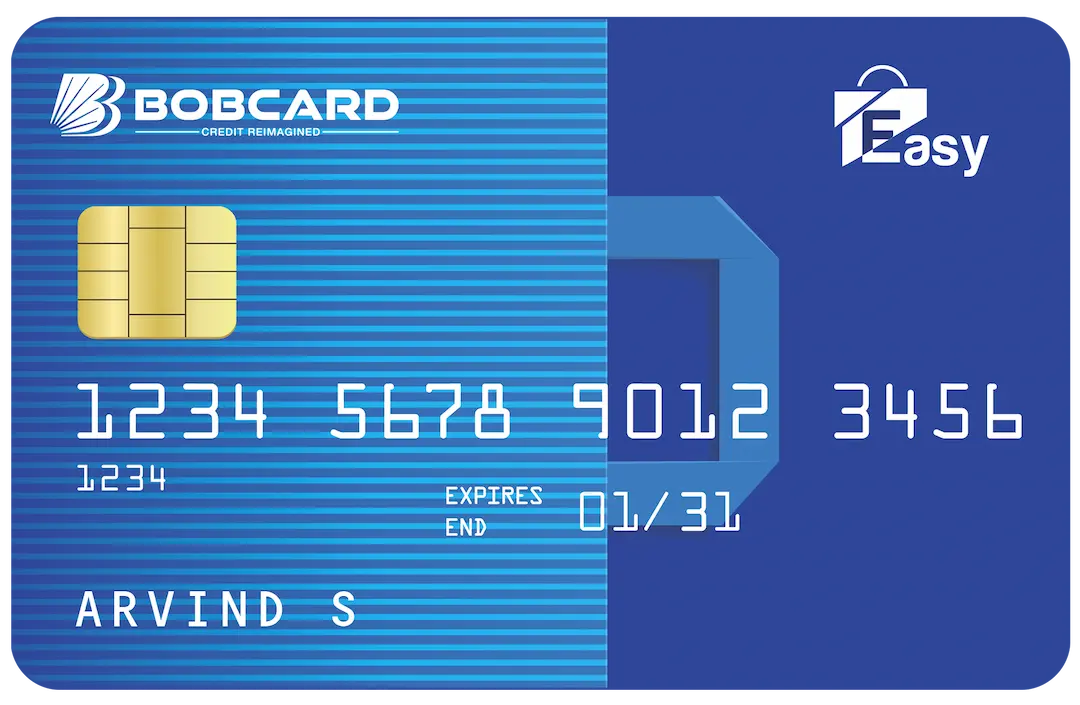
- The recommended minimum CIBIL score for BOBCARD Easy is 700+; Eterna requires 750+
- A rejected application does not cause extra score damage beyond the hard inquiry already triggered
- Responsible card usage after approval - full payments, low utilisation - rebuilds the score faster than it dropped
Your CIBIL score is the three-digit number that determines whether you get a loan, what interest rate you pay, which credit card you qualify for, and sometimes even whether a landlord rents to you. In India, a score of 750 and above is considered good - anything below 700 starts closing doors. The good news is that credit scores are not fixed. With deliberate steps, most people can improve their score meaningfully within 6-12 months. This guide covers everything: what your score is made of, what's dragging it down, and the specific actions that move the needle fastest.
What Is a CIBIL Score and Why Does It Matter?
CIBIL stands for Credit Information Bureau (India) Limited, now a subsidiary of TransUnion. Your CIBIL score is a 3-digit number ranging from 300 to 900, calculated from the data in your credit report. It summarises your credit history - how much you owe, how consistently you pay, how long you have had credit, and how much new credit you have sought recently.
India has four licensed credit information companies: TransUnion CIBIL, Experian India, CRIF High Mark, and Equifax India. All four calculate scores from similar data, but lenders most commonly reference CIBIL. When a bank says 'minimum CIBIL score 750,' they are almost always referring to the TransUnion CIBIL score.
What Is a Good CIBIL Score in India?
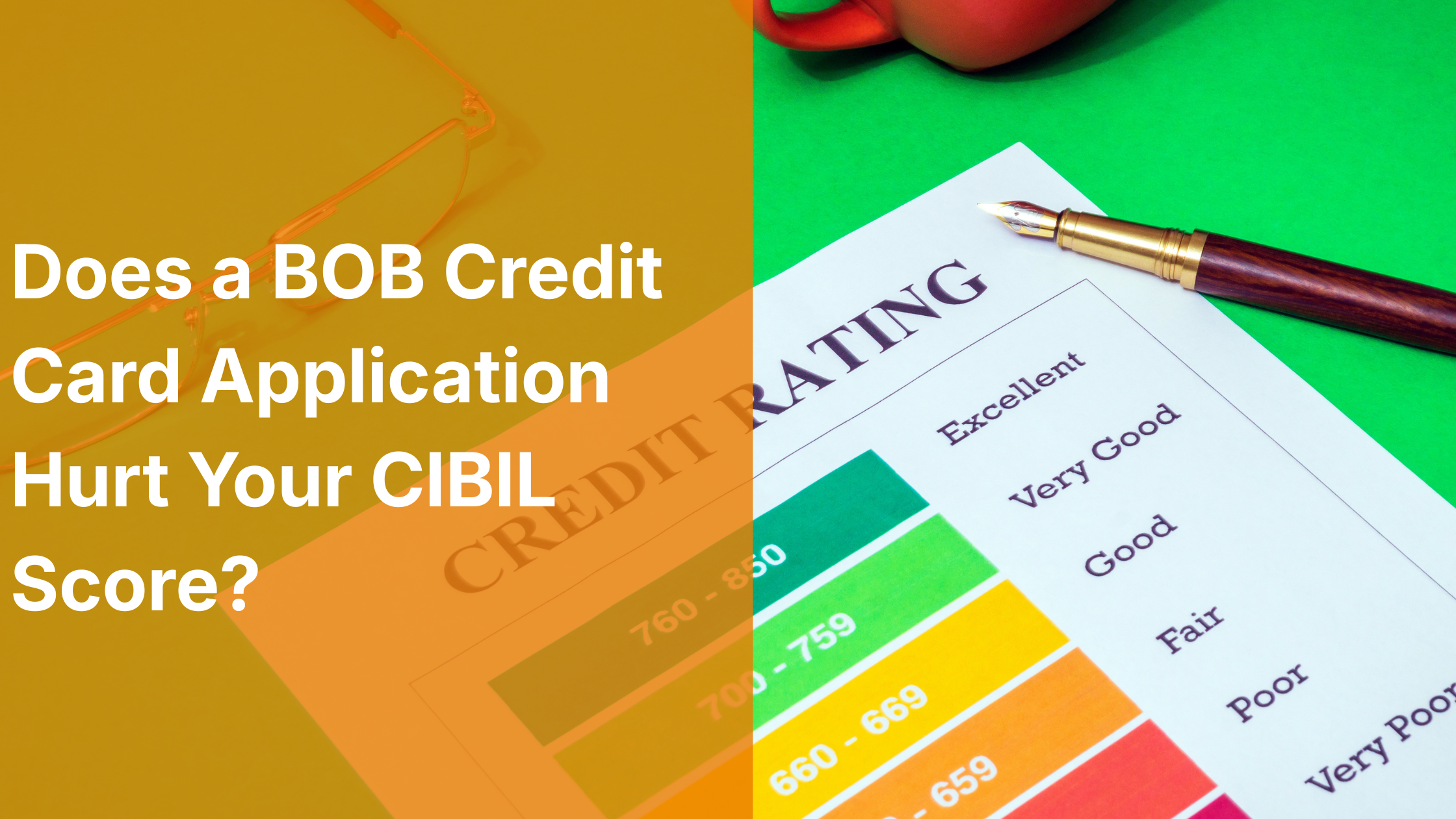
| Score Range | Rating | Loan/Card Approval | Interest Rate Impact |
|---|---|---|---|
| 750 - 900 | Excellent | Highest approval rate | Best rates offered |
| 700 - 749 | Good | Good approval rate | Competitive rates |
| 650 - 699 | Fair | Selective approval | Higher rates likely |
| 600 - 649 | Poor | Most applications declined | Secured products only |
| 300 - 599 | Very Poor | Almost all declined | Not applicable |
If you are a first-time borrower with no credit history, CIBIL reports your score as -1 or NH (No History). This is different from a low score - it simply means there is no data to calculate from. The fastest way to establish a score in this case is to get a secured credit card or a small credit builder loan.
How Is Your CIBIL Score Calculated?
CIBIL uses a proprietary algorithm, but the general weightings are consistent with global credit scoring models:
| Factor | Approximate Weight | What It Measures |
|---|---|---|
| Payment History | 35% | On-time vs late vs missed payments |
| Credit Utilisation Ratio | 30% | How much of your credit limit you use |
| Credit Age & History | 15% | How long your oldest account has been open |
| Credit Mix | 10% | Variety of credit types (cards, loans, etc.) |
| New Credit Inquiries | 10% | Number of recent hard inquiries |
Understanding this breakdown tells you exactly where to focus. Payment history and credit utilisation together account for 65% of your score - these are the two levers that move your score fastest.

10 Proven Ways to Improve Your CIBIL Score in India
1. Pay Every Bill on Time - Without Exception
Payment history is the single largest factor in your score. A single missed EMI or credit card payment can drop your CIBIL score by 30 to 100 points, depending on how long the payment is overdue and your current score. Set up NACH mandates (auto-debit) for all EMIs and at least the minimum due on credit cards. Never rely on memory alone.
If you have already missed payments, the damage cannot be undone retroactively. But consistent on-time payments from this point forward begin rebuilding your score. CIBIL reports typically reflect payment behaviour for the past 36 months, with recent history weighted more heavily.
2. Keep Your Credit Utilisation Below 30%
Credit utilisation ratio is the percentage of your total available credit limit that you are using at any given time. If you have one credit card with a ₹1,00,000 limit and your current outstanding is ₹40,000, your utilisation is 40% - higher than the recommended threshold.
To keep utilisation below 30%: either reduce spending, or request a credit limit enhancement from your card issuer. On a BOBCARD, you can request a limit increase after 6-12 months of regular usage. A higher limit with the same spending automatically reduces your utilisation ratio.
3. Do Not Close Old Credit Cards
Credit age accounts for 15% of your CIBIL score. Your oldest credit account establishes the anchor of your credit history. Closing an old credit card shortens the average age of your accounts and can drop your score. Even if you rarely use an old card, keep it active with small, occasional transactions - enough to prevent the issuer from closing it due to inactivity.
4. Avoid Multiple Loan or Card Applications in a Short Window
Each formal credit application triggers a hard inquiry from the lender to CIBIL. Multiple hard inquiries within a 3-6 month window signal financial stress and can collectively reduce your score by 20-50 points. If you are comparing loan offers, do so within a concentrated 14-day window - some credit scoring models treat multiple inquiries for the same product type within a short period as a single inquiry.
5. Build a Credit Mix
Having only one type of credit - for example, only a credit card with no loans - limits your score potential. A healthy credit mix includes at least one revolving credit product (credit card) and one instalment product (personal loan, car loan, or home loan). Adding a secured credit card backed by a BOB fixed deposit is one way to establish or diversify your credit mix without income requirements.
6. Check Your CIBIL Report for Errors and Dispute Them
Errors on credit reports are more common than most people realise. A closed loan that still shows as 'active,' a payment marked as 'late' that you paid on time, or an account you never opened (potential identity fraud) - all of these negatively affect your score without any fault on your part.
You are entitled to one free CIBIL report per year at cibil.com. Review every entry. If you find an inaccuracy, raise a dispute through the CIBIL online dispute portal. Confirmed errors are typically corrected within 30 days.
7. Convert Large Credit Card Spends to EMI
If you made a large purchase on your BOBCARD that is pushing your utilisation above 30%, converting it to an EMI reduces the outstanding balance on your credit card account immediately. This lowers your utilisation ratio in the next statement cycle. The EMI shows as a separate instalment loan on your credit report - manageable and predictable.
8. Settle or Clear Outstanding Overdue Accounts
If you have accounts in default or marked as 'written off,' they are actively damaging your score every month. Settling these - even at a negotiated amount - stops the ongoing negative reporting. However, a 'settled' status (meaning you paid less than the full amount) is still viewed negatively by lenders. Paying the full outstanding and getting a 'closed' status is the cleanest resolution.
After settlement, scores begin recovering, but the record remains visible on your CIBIL report for 7 years. Lenders may still question settled accounts during application review.
9. Use a Secured Credit Card to Build or Rebuild Credit
If your score is below 650 or you have no credit history, most regular credit cards are out of reach. A secured credit card - issued against a fixed deposit you place with the bank - is the most reliable entry point. BOBCARD offers an FD-backed credit card that requires no income proof and has minimal documentation requirements. The card reports to CIBIL exactly like a regular card, so responsible usage builds your score at the same pace.
10. Increase Your Credit Limits Strategically
A higher credit limit with the same spending level automatically reduces your utilisation ratio. After 6-12 months of on-time payments on any credit card, you can request a credit limit enhancement. Most issuers will approve this without a hard inquiry if you are a consistently good customer. On BOBCARD, you can request a limit increase via the Bob World app under the 'Credit Card' section.
How Long Does It Take to Improve a CIBIL Score?
| Starting Score | Target Score | Realistic Timeline |
|---|---|---|
| 300-500 (severe damage) | 650+ | 18-24 months |
| 500-599 (very poor) | 700+ | 12-18 months |
| 600-649 (poor) | 730+ | 9-12 months |
| 650-699 (fair) | 750+ | 6-9 months |
| 700-749 (good) | 780+ | 3-6 months |
| No history (NH) | 700+ (first score) | 6-12 months |
These timelines assume consistent on-time payments, no new defaults, and utilisation kept below 30% throughout. There are no shortcuts - agencies claiming to 'repair' your CIBIL score faster are either disputing legitimate errors (which you can do yourself for free) or are not reputable.
Understanding Credit Limit and How It Connects to Your Score
Your credit limit across all active credit cards is a direct input into your utilisation ratio. The higher your combined credit limit with the same spending level, the better your utilisation ratio and the higher your score tends to go.
On BOBCARD, credit limits are assigned based on your gross annual income, existing liabilities, and CIBIL score at the time of application. The general benchmarks:
- BOBCARD Easy: credit limit typically 2-3x monthly net income
- BOBCARD Select: credit limit typically 3-4x monthly net income
- BOBCARD Premier: credit limit typically 4-5x monthly net income
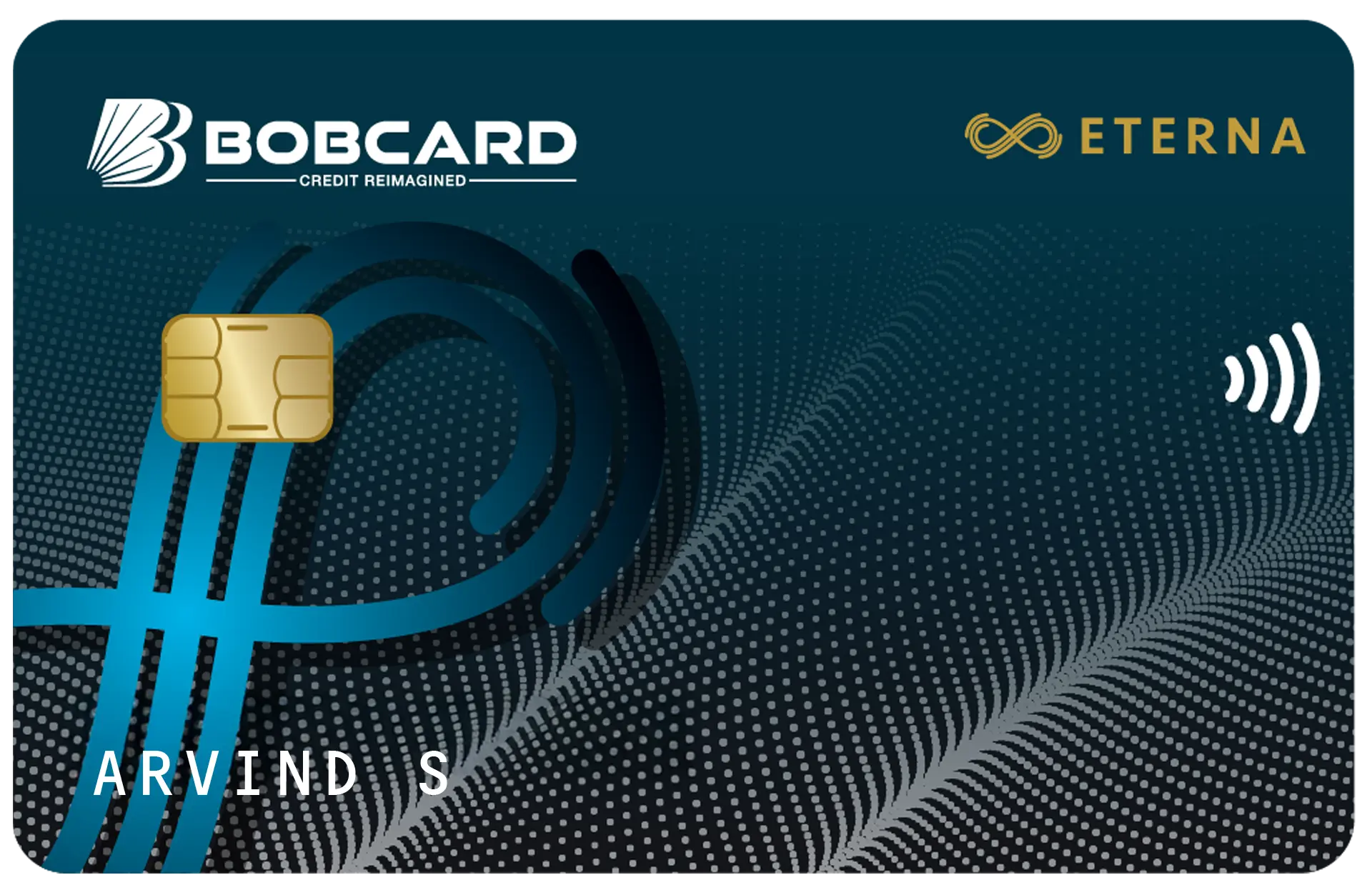
- BOBCARD Eterna: credit limit typically 5-8x monthly net income, subject to BOB's internal credit policy
Charges That Can Silently Damage Your Credit Score
Several credit card charges, if unpaid, can enter your credit report and damage your score without you realising it:
| Charge Type | On BOBCARD | CIBIL Risk If Unpaid |
|---|---|---|
| Late Payment Fee | ₹100-₹1,200 based on outstanding | Added to due - missed payment reported |
| Over-limit Fee | ₹500 + GST per instance | Balance breach can signal distress |
| Annual Fee (if not waived) | ₹500-₹2,499 + GST by variant | Unpaid fee creates an overdue |
| Interest on Revolving Balance | 3.5% per month (42% per annum) | High balance raises utilisation |
| Foreign Transaction Fee | 2% + 18% GST on BOBCARD | Does not directly affect CIBIL |
| Cash Advance Fee | 2.5%, min ₹500 | Cash advance reported as credit use |
The most dangerous is unpaid annual fees. If you forget to pay an annual fee on a card you barely use, it can accumulate late charges, enter overdue status, and get reported to CIBIL as a missed payment - all for an amount of ₹500-₹750.