



































Key Takeaways
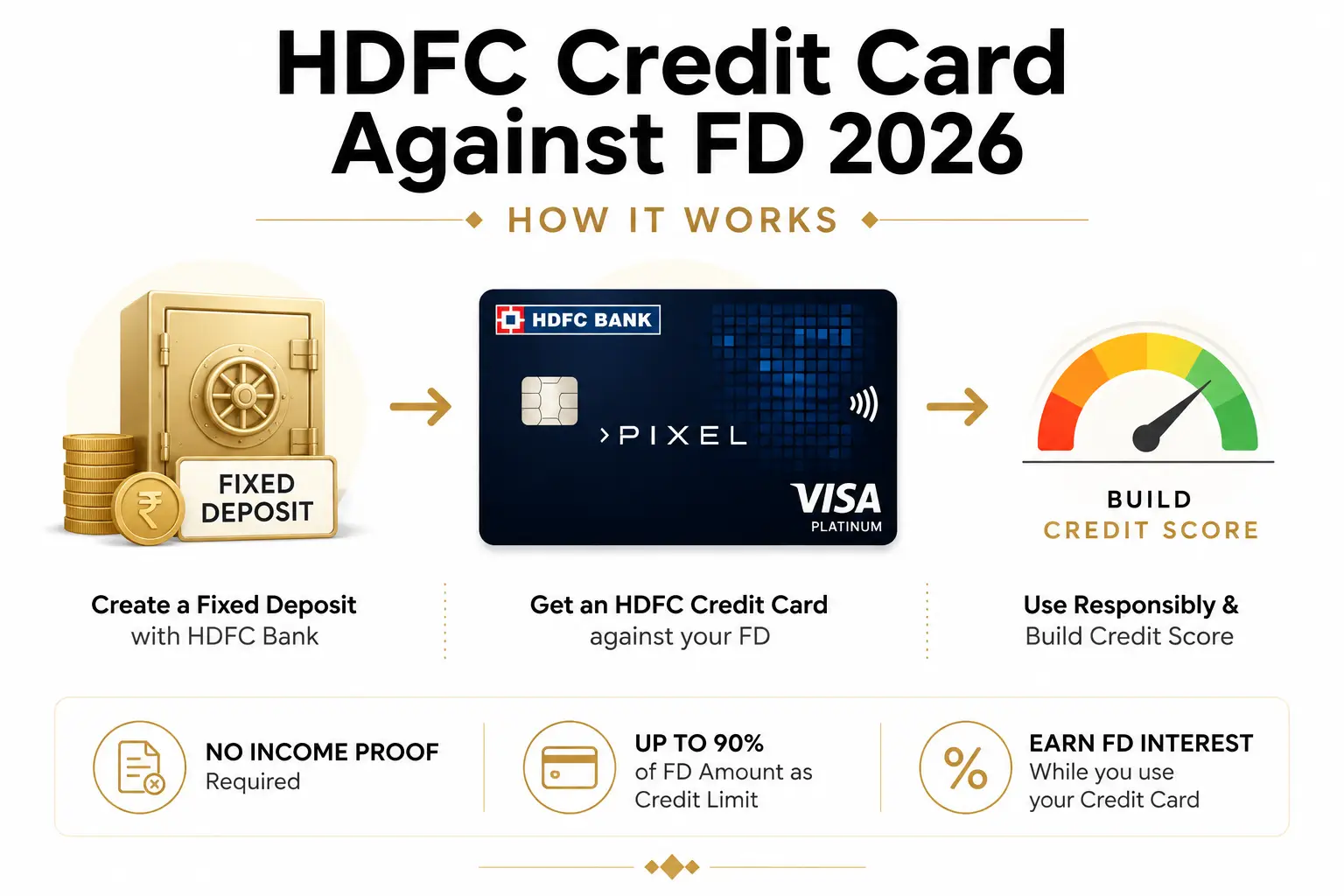
- HDFC does offer credit cards against a fixed deposit - confirmed directly on HDFC's own website - though it isn't one single named product the way some banks structure it.
- The minimum FD required is ₹15,000, with a credit limit set at up to 90% of the deposit value.
- No income proof or employment information is required - the FD itself is the collateral.
- Not every type of FD qualifies - Tax Saver, NRI, Minor, existing lien-marked, sweep-in and non-withdrawal FDs are all excluded.
- Multiple eligible FDs can be combined in a single application to increase your credit limit.
Does HDFC Actually Offer a Credit Card Against FD?
Yes - confirmed directly on HDFC Bank's own website. Unlike some banks that structure this as a single dedicated product (a specific named card issued only against FD), HDFC's approach works more like a route to eligibility: you open or hold an HDFC fixed deposit, and HDFC issues a credit limit against it - up to 90% of the FD's value - without requiring the income proof or employment history a standard application would need.
This distinction matters if you were expecting one specific "FD card" by name. HDFC's FD-secured route is better understood as a mechanism that unlocks credit card eligibility using your deposit as security, rather than a single standalone product.
How the Credit Limit Works
The credit limit is set at up to 90% of your fixed deposit amount - so a ₹50,000 FD could support a credit limit of up to ₹45,000, for example. If a single FD isn't enough to support the limit you want, HDFC allows multiple eligible fixed deposits to be selected in the same online application to increase the total credit limit available.
The FD itself continues earning interest at its normal rate throughout - securing a credit card against it doesn't pause or reduce the interest the deposit earns. What changes is liquidity: the FD is placed under lien and can't be withdrawn while it's securing the card.
Minimum FD Amount and Requirements
The minimum FD amount is ₹15,000, per HDFC's own published terms. Beyond the amount itself, several conditions apply to which FDs actually qualify:
- The FD must be held with HDFC Bank, or you must be willing to open one.
- Minimum tenure requirements apply - an FD with too short a tenure won't qualify.
- PAN must be updated and operative on the account.
- Tax Saver FDs, NRI FDs, FDs in a minor's name, existing lien-marked FDs, sweep-in FDs, and non-withdrawal FDs are all explicitly excluded from securing a credit card.
Which HDFC Cards Can You Get This Way?
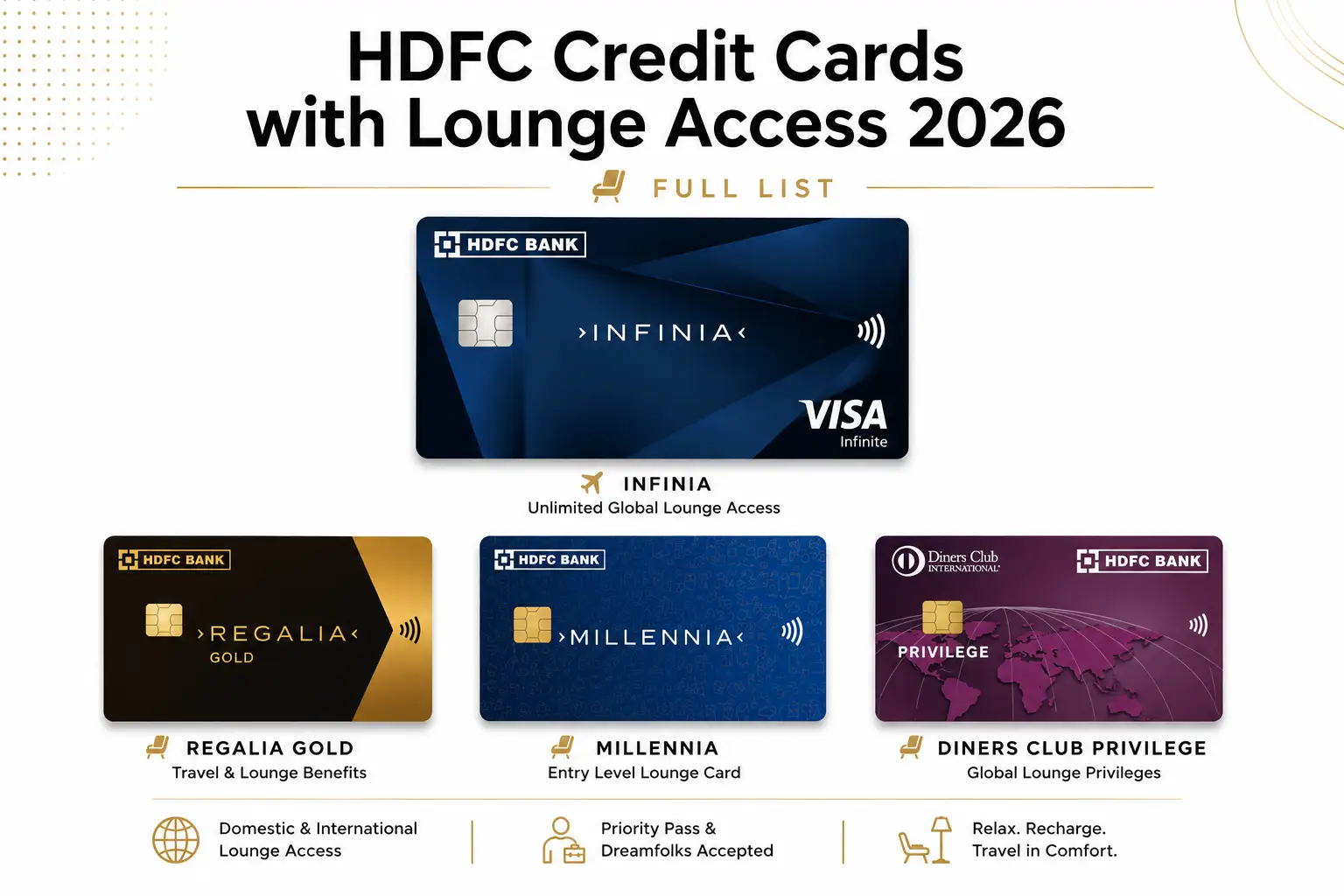
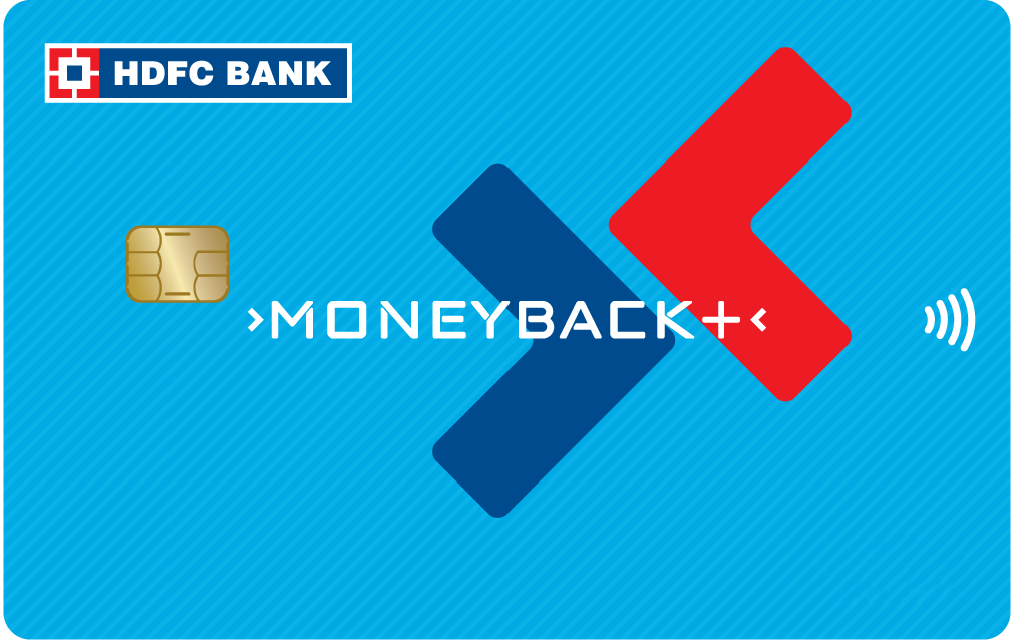
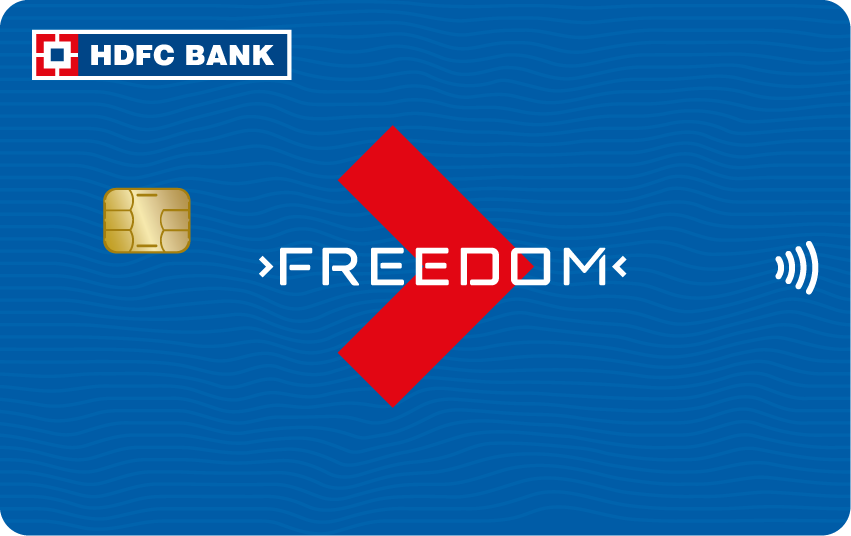
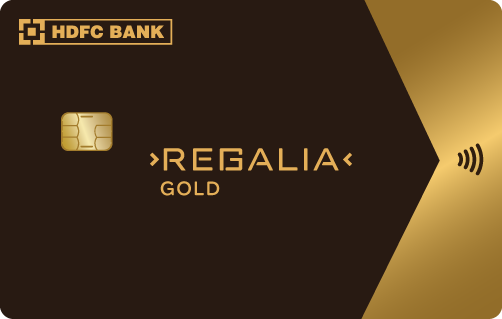
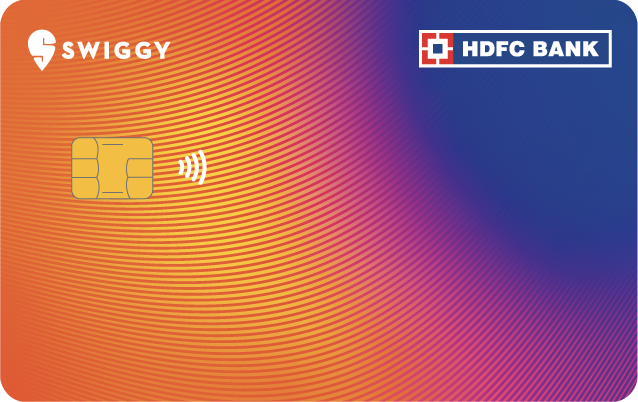
Because HDFC's FD route works as a mechanism rather than a single product, the specific card you're issued depends on your FD amount and HDFC's own assessment at the time of application. Based on available reporting, this can range from entry-level cashback-style cards for smaller FDs up to premium cards like Regalia for larger deposits - though the exact FD amount needed for any specific premium card isn't consistently documented, and figures cited by third-party sources (such as an approximate ₹4 lakh FD for Regalia-tier access) should be treated as indicative rather than confirmed, since HDFC's own site doesn't publish a fixed FD-to-card mapping.
The realistic expectation: a smaller FD (closer to the ₹15,000 minimum) is more likely to result in an entry-level card, while a larger FD improves your chances of a card with a stronger reward structure - but this isn't a fixed, published table you can plan against precisely.
How to Apply
- Ensure you have an existing HDFC fixed deposit, or open one meeting the ₹15,000 minimum.
- Confirm the FD type is eligible - avoid Tax Saver, NRI, Minor, or already-lien-marked deposits.
- Apply for the credit card against FD through HDFC's official portal.
- Select one or more eligible FDs during the application if you want to combine them for a higher credit limit.
- Once approved, activate the card within 30 days of issuance - HDFC automatically closes cards not activated within this window. Activation can be done via a transaction, setting a new PIN, or through the MyCards portal.
Is an FD-Secured HDFC Card Worth It?
This route makes the most sense for a specific situation: no income proof to offer, a limited or damaged credit history, or a preference to build credit without going through a standard income-based application. Since the card reports to credit bureaus like any standard card, responsible use - on-time payments, low utilisation - can genuinely help build or rebuild a credit profile over time, all while the underlying FD continues earning its normal interest.
It's a weaker fit for someone who already qualifies for a strong unsecured HDFC card on income alone, since the FD-secured route doesn't guarantee access to HDFC's higher-reward cards, and locks up the FD amount as collateral in the meantime.