




















































Table of Contents
- 1. Key Takeaways
- 2. The Core Difference: RuPay Is India's Domestic Network
- 3. UPI Linking: The Single Biggest Practical Difference
- 4. International Acceptance: Visa and Mastercard Still Lead
- 5. Forex Handling: Network Doesn't Set the Markup, the Card Does
- 6. Visa vs Mastercard on an SBI Card: Does It Matter?
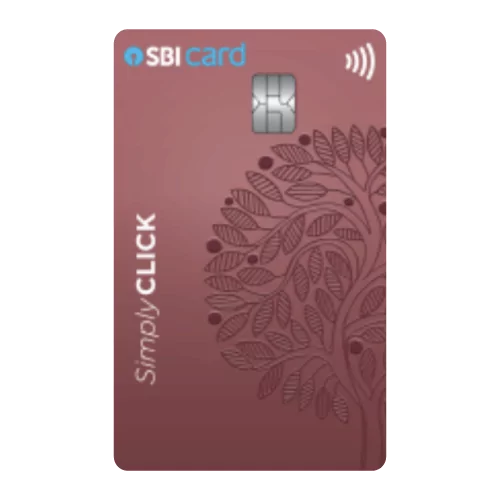
- 7. SBI Cards Available Across Multiple Networks
- 8. How to Choose
- 9. Why This Restriction Exists
- 10. Frequently Asked Questions
Key Takeaways
- Only RuPay SBI credit cards can be linked to UPI for scan-and-pay - Visa and Mastercard cards cannot, regardless of which specific SBI card you hold.
- This is an NPCI/RBI-level restriction, not an SBI decision - it applies identically across every Indian bank's card portfolio.
- Visa and Mastercard both offer wider international acceptance than RuPay, which remains more limited outside India despite recent expansion.
- SBI issues several cards - including SimplySAVE, ELITE, PRIME and IRCTC SBI Platinum - on multiple networks under the same card name, so the network itself is often a choice you make at application, not a fixed card property.
- There's no meaningful difference between Visa and Mastercard on an SBI card specifically - the choice between those two rarely matters; the real decision is RuPay vs. one of the international networks.
The Core Difference: RuPay Is India's Domestic Network
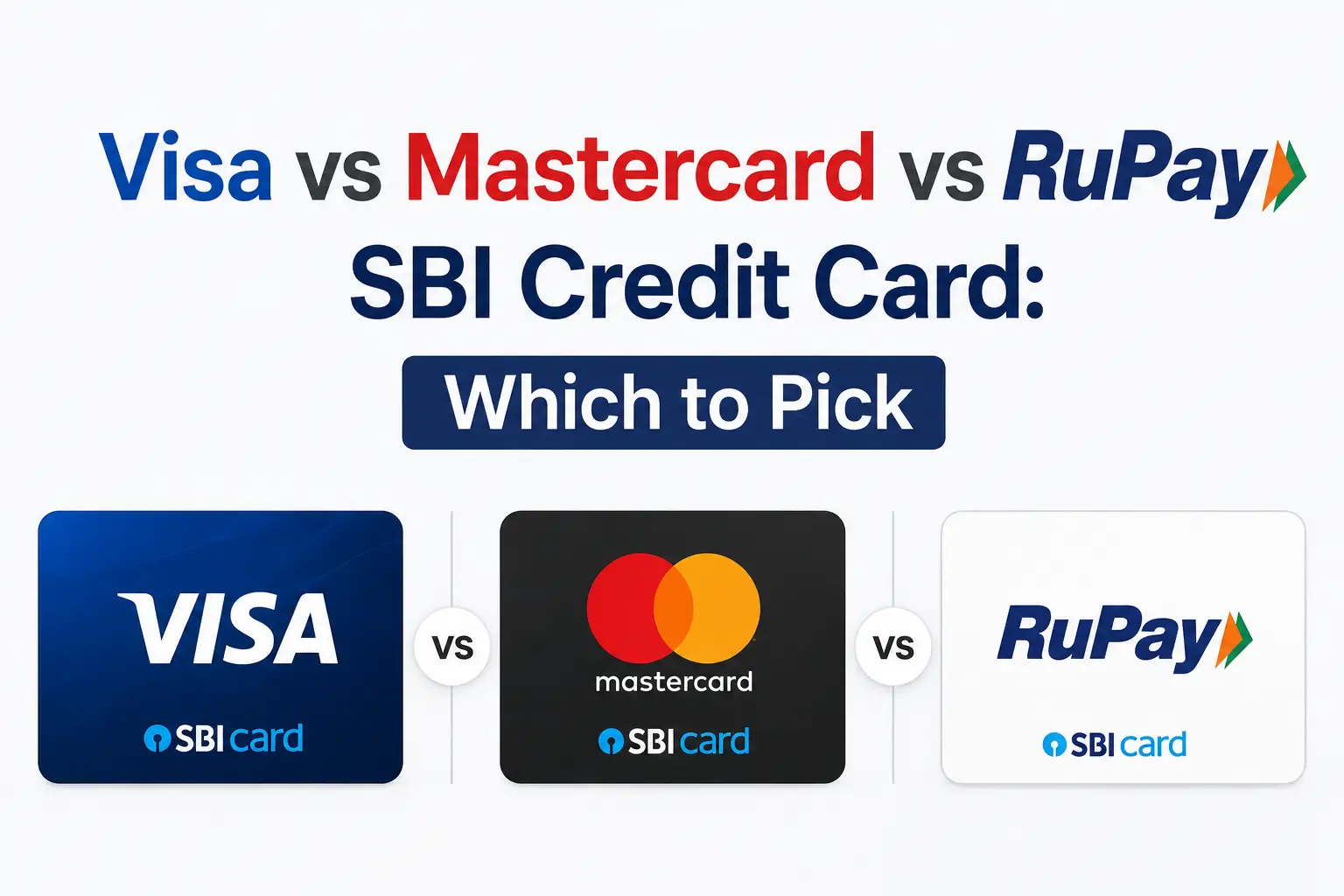
Visa and Mastercard are international payment networks, accepted at millions of merchants across more than 200 countries. RuPay is India's own network, built by the National Payments Corporation of India (NPCI), designed specifically for domestic transactions and integrated tightly with India's digital payments infrastructure - most importantly, UPI.
For an SBI cardholder, this distinction shows up in three practical places: whether the card can be linked to UPI, how well it's accepted when travelling abroad, and - to a smaller degree - the transaction routing and processing costs that occasionally influence a bank's fee structure on a given network.
UPI Linking: The Single Biggest Practical Difference
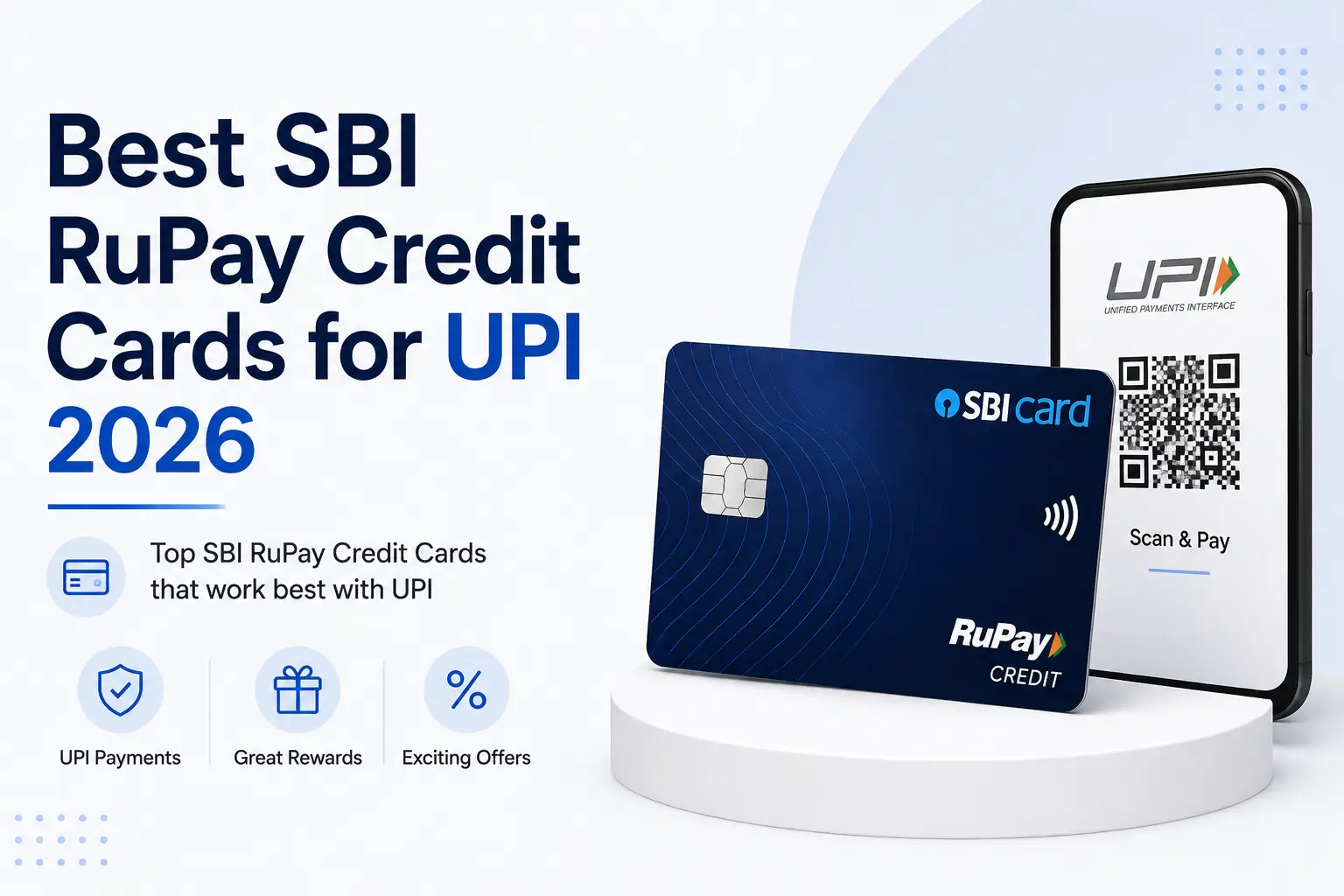
Since June 2022, RBI granted RuPay exclusive rights to process credit card transactions through UPI. This means only RuPay SBI credit cards can be linked to a UPI app like Google Pay, PhonePe or Paytm for scan-and-pay - a Visa or Mastercard SBI card, no matter how premium, cannot be linked to UPI at all. This isn't a temporary gap or something SBI could change on its own; it's a network-level restriction set by NPCI and RBI, applying identically to every Indian card issuer.
If UPI-linked spending matters to you - for small daily purchases at local merchants who accept QR payments but don't have a card machine - the network choice isn't really optional. It has to be RuPay.
For the full breakdown of which specific SBI cards are available on RuPay, and the reward mechanics of using them on UPI, see Best SBI RuPay Credit Cards for UPI Payments 2026.
International Acceptance: Visa and Mastercard Still Lead
RuPay has expanded its international acceptance in recent years - through partnerships with Discover and JCB, and direct bilateral tie-ups with a growing number of countries - but it remains meaningfully behind Visa and Mastercard for someone travelling or transacting internationally on a regular basis. If your SBI card will see meaningful use outside India, a Visa or Mastercard variant is still the safer default; RuPay acceptance abroad, while improving, isn't yet comparable to either international network at most merchants.
Within India, all three networks are effectively universally accepted - this is purely an international-usage consideration, not a domestic one.
Forex Handling: Network Doesn't Set the Markup, the Card Does
A common misconception is that Visa or Mastercard cards carry a different forex markup than RuPay cards by network design. In practice, the forex markup percentage on an SBI credit card is set by the specific card product - AURUM and ELITE at 1.99%, MILES PRIME at 2.5%, and so on - not by which network processes the transaction. Since RuPay cards see relatively little international volume in the first place, this distinction mostly doesn't come up in practice, but it's worth knowing the network itself isn't what determines your forex cost.
For the exact forex markup by SBI card variant, see the SBI Credit Card Annual Fees & Charges guide.
Visa vs Mastercard on an SBI Card: Does It Matter?
Between Visa and Mastercard specifically - setting RuPay aside - there's little practical difference for most SBI cardholders. Both offer comparable international acceptance, similar contactless payment support, and neither consistently offers better benefits than the other on the same underlying SBI card product; benefit differences you might notice (like a Visa-branded welcome offer versus a Mastercard-branded one) tend to come from a specific promotional tie-up at a point in time, not a structural network advantage. If a specific SBI card is offered on both networks, the choice mostly comes down to whichever is available at the time of application, or a minor preference with no meaningful downside either way.
SBI Cards Available Across Multiple Networks
Several SBI cards exist as effectively separate SKUs depending on network, and it's worth knowing this upfront rather than assuming "SimplySAVE" or "ELITE" is a single fixed product:
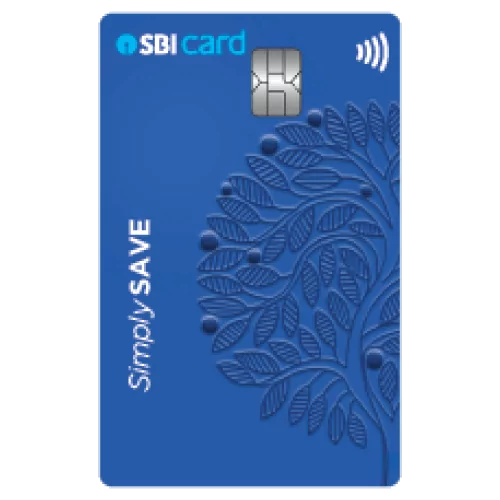
- SBI SimplySAVE - available on Visa/Mastercard (standard) and as a distinct RuPay-UPI variant.
- SBI Card ELITE and SBI Card PRIME - both available on RuPay as well as the standard international networks.
- IRCTC SBI Platinum - issued on both Visa and RuPay, with the RuPay variant specifically supporting UPI linking.
- BPCL SBI Card Octane - available on RuPay in addition to its standard network variant.
Card network availability can change over time - always confirm which networks are currently offered for a specific card during the SBI Card application flow.
How to Choose
| Priority | Best Network Choice |
|---|---|
| I want to link my card to UPI for scan-and-pay | RuPay - the only option that supports this |
| I travel internationally often or shop on foreign websites | Visa or Mastercard - wider global acceptance |
| I mostly spend domestically, in-store or online within India | Any of the three work equally well |
| I want the lowest forex markup available | Check the specific card variant's rate - not the network |
A growing number of SBI cardholders end up holding two cards for this exact reason - a RuPay card for UPI-linked daily spend, and a Visa or Mastercard card kept for travel and larger transactions. This isn't redundant; it's the practical way to get both networks' strengths rather than compromising on either.
Why This Restriction Exists
The RuPay-only UPI rule traces back to a deliberate regulatory choice rather than a technical limitation. RuPay is built and governed domestically by NPCI, which also operates UPI - giving the regulator direct control over how credit-on-UPI functions, including fraud safeguards and transaction routing, without depending on international card networks' infrastructure. Visa and Mastercard have not been extended the same UPI integration, and there's no publicly announced timeline for that changing, so this isn't a gap likely to close soon.