





























Table of Contents
- 1. Key Takeaways
- 2. Why an IRCTC Co-Branded Card Is Worth Having
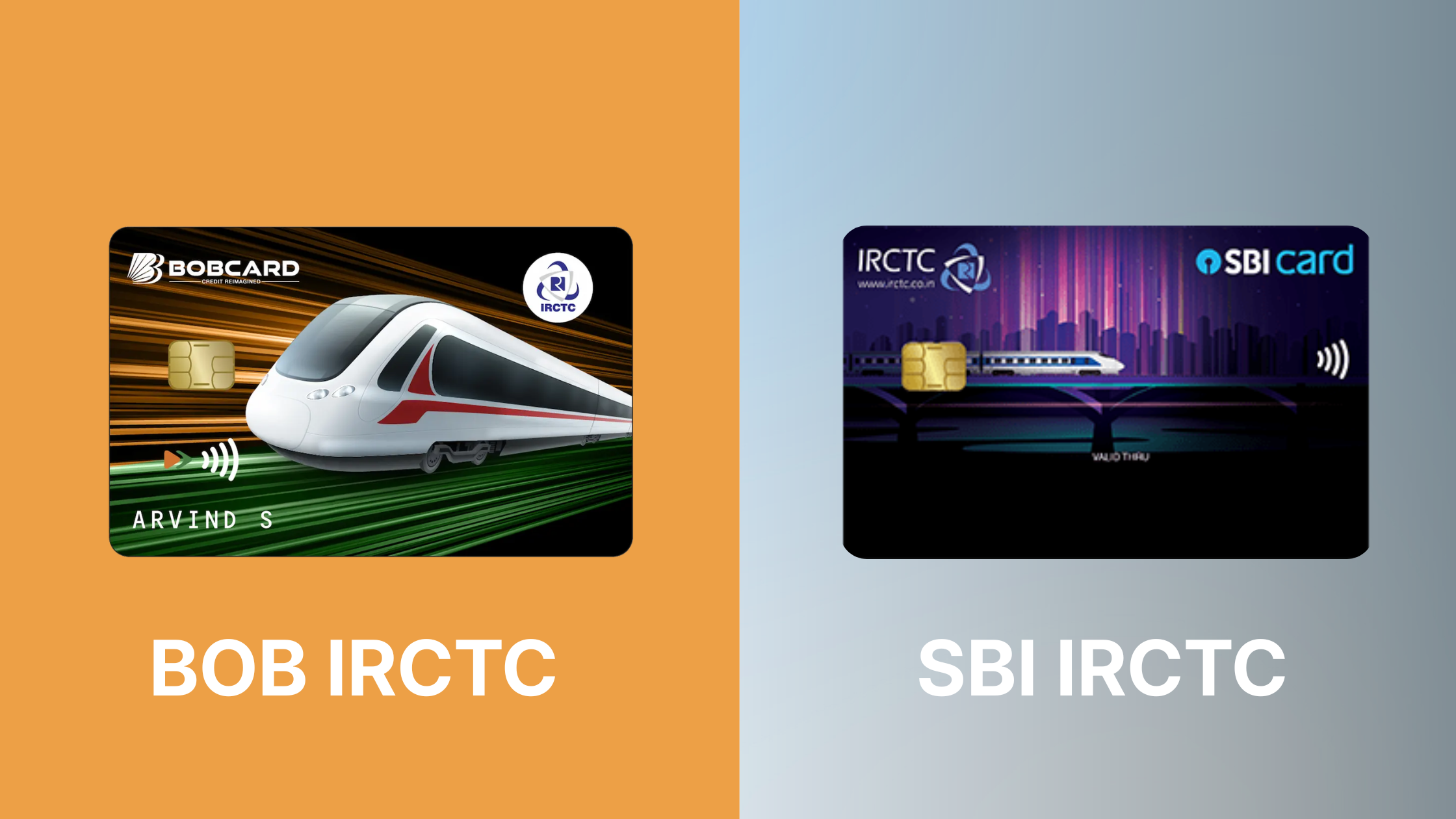
- 3. BOB IRCTC Card: Full Overview
- 4. SBI IRCTC Card: Full Overview
- 5. Feature Comparison
- 6. The Annual Saving Calculation
- 7. IRCTC Booking Classes: Which Earn Best
- 8. Beyond IRCTC: Using the Card for Other Travel
- 9. Who Should Choose BOB IRCTC Card
- 10. Who Should Choose SBI IRCTC Card
Key Takeaways
- Both BOB IRCTC and SBI IRCTC cards earn accelerated reward points or cashback on IRCTC ticket bookings - the primary benefit that makes them worthwhile for train travellers.
- The IRCTC transaction charge waiver is one of the most valuable features of both cards. IRCTC charges a 1.8% transaction convenience fee on credit card bookings. The co-branded card waives this.
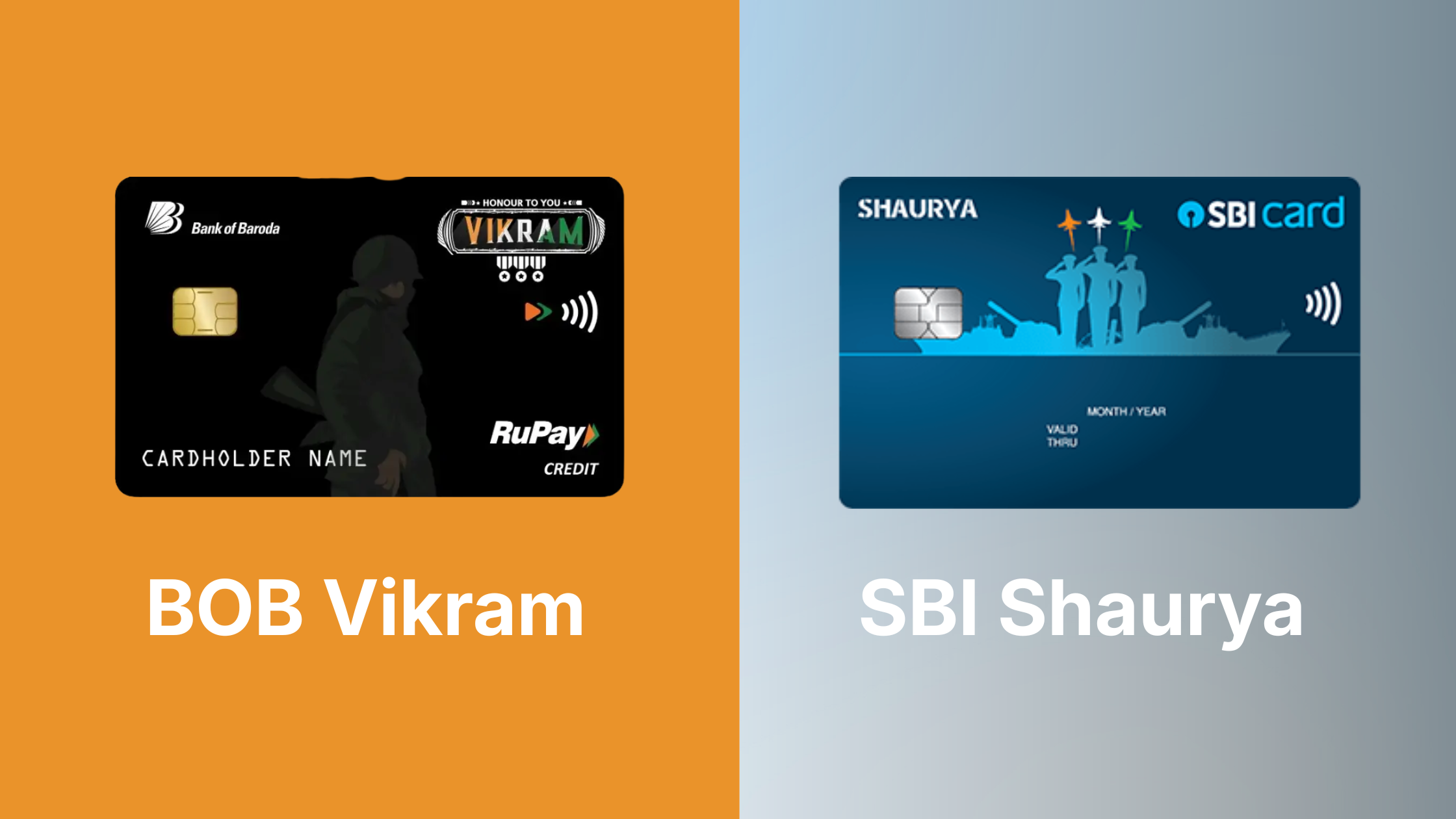
- SBI IRCTC RuPay Card is one of the most popular train travel cards in India and benefits from SBI's massive customer base and IRCTC's long-standing partnership with SBI.
- BOB IRCTC card provides an alternative for Bank of Baroda customers who want IRCTC rewards within their existing banking relationship.
- Neither card is primarily designed for non-rail travel or lifestyle benefits. Both are train-first cards that offer limited value for air travellers or lifestyle spenders.
- The transaction fee waiver alone on IRCTC bookings can save Rs 1,800 on Rs 1 lakh of annual IRCTC spend.
Why an IRCTC Co-Branded Card Is Worth Having
Most travellers know that IRCTC's website and app charge a convenience fee on credit card transactions. For a Rs 2,000 railway ticket, the 1.8% convenience fee adds Rs 36. For a family of four booking a return journey, this can add Rs 144 to Rs 288 in transaction charges. For a frequent business traveller booking 20 to 30 tickets per year, the annual convenience fee total can reach Rs 1,000 to Rs 2,500.
An IRCTC co-branded card waives this convenience fee entirely. On Rs 1 lakh in annual IRCTC ticket bookings, the waiver alone saves Rs 1,800 - exceeding most IRCTC card annual fees. Add the reward points earned on top, and the total annual value of an IRCTC card for a frequent rail user is strong.
This is fundamentally different from most co-branded cards where the benefit is pure reward point earn. The transaction fee waiver on IRCTC is a hard-rupee saving on every booking, making the value proposition clear and measurable.
BOB IRCTC Card: Full Overview
Annual Fee and Eligibility
The BOBCARD IRCTC card is an entry-level to mid-tier card with a low annual fee. Fee waiver is typically achievable through an annual spend threshold. Eligibility follows standard BOBCARD criteria. Verify current fee and waiver terms at bobcard.co.in following the April 2026 product revision.
IRCTC Transaction Charge Waiver
The BOB IRCTC card waives the IRCTC convenience fee on ticket bookings made on IRCTC.co.in or the IRCTC Rail Connect app using the co-branded card. This applies to AC and non-AC class bookings. The waiver applies when the transaction is made specifically using the co-branded card and processed through IRCTC's payment gateway.
Reward Earn on IRCTC Bookings
The BOB IRCTC card earns accelerated reward points on IRCTC transactions. At the BOBCARD rate of 1 RP = Rs 0.25, the earn rate per Rs 100 in IRCTC bookings translates to an effective cashback percentage that must be verified at bobcard.co.in for current earn rates after the April 2026 revision.
Non-IRCTC Earn
On all other eligible transactions, the BOB IRCTC card earns at the base BOBCARD rate for its tier. It is not designed for lifestyle categories. Use it primarily for IRCTC bookings and routine spend to meet the fee waiver threshold. For high-earn categories like dining, online shopping, or travel outside IRCTC, other BOBCARD products like Select or Eterna are more appropriate.
Benefits Summary
- IRCTC convenience fee waiver on co-branded card bookings
- Accelerated RP earn on IRCTC transactions
- Base earn on all other eligible spends
- 1% fuel surcharge waiver on eligible fuel transactions, capped per cycle
- Zero lost-card liability protection

SBI IRCTC Card: Full Overview
The SBI–IRCTC Partnership
SBI and IRCTC have one of the most established co-branded card partnerships in India. The SBI IRCTC Credit Card (and its RuPay variant) has been available for over a decade and has a large installed cardholder base. SBI's position as the largest bank in India, combined with IRCTC's role as the sole online ticketing portal for Indian Railways, makes this partnership natural and well-supported by both institutions.
Annual Fee and Waiver
The SBI IRCTC card is available in multiple variants at different fee points. The standard SBI IRCTC card has a low annual fee. SBI has also offered lifetime-free variants in specific promotional periods. Check sbicard.com for current fee structures and waiver conditions.
IRCTC Transaction Charge Waiver
The SBI IRCTC card waives the IRCTC transaction convenience fee on bookings made through IRCTC.co.in and the IRCTC Rail Connect app. The waiver applies to all class bookings made using the SBI IRCTC card. This is the card's most financially significant single benefit for regular IRCTC users.
Reward Earn Structure
- Accelerated earn on IRCTC bookings: SBI IRCTC card has historically offered 10% value back on IRCTC ticket bookings through a combination of reward points - verify exact current earn rate at sbicard.com
- Earn on dining and other select categories at elevated rates
- Base earn on all other eligible spends
- Reward points redeemable against IRCTC bookings, statement credit, or merchandise via SBI Card's redemption portal
Additional Benefits
- 1% fuel surcharge waiver at all fuel stations across India, capped at Rs 100 per billing cycle
- Complimentary personal accidental insurance cover (verify sum insured at sbicard.com)
- Access to SBI Card's IRCTC booking platform integration - seamless application of transaction waiver
- SBI Card's extensive customer care network and digital app management
Feature Comparison
| Feature | BOB IRCTC Card | SBI IRCTC Card |
|---|---|---|
| Issuer | BOBCARD (Bank of Baroda) | SBI Card (State Bank of India) |
| IRCTC transaction fee waiver | Yes | Yes |
| Earn on IRCTC bookings | Accelerated RP (verify bobcard.co.in) | High RP earn (verify sbicard.com) |
| Non-IRCTC earn | Base BOBCARD rate | Base SBI Card rate + dining earn |
| Fuel surcharge waiver | 1% on eligible fuel, capped | 1% on all fuel, max Rs 100/cycle |
| Network | Visa/RuPay | RuPay (primary) / Visa |
| Annual fee | Low (check bobcard.co.in) | Low (check sbicard.com) |
| Redemption of points | BOBCARD portal - statement credit | IRCTC booking / statement credit |
The Annual Saving Calculation
Let us calculate the concrete annual benefit for a traveller who books Rs 60,000 worth of IRCTC tickets per year (approximately Rs 5,000 per month - realistic for a family or frequent business traveller).
| Benefit Component | Annual Value (Rs 60,000 IRCTC spend) |
|---|---|
| IRCTC convenience fee waiver (1.8%) | Rs 1,080 saved |
| Reward points on IRCTC at ~5% effective earn | Rs 3,000 in RP value |
| Total annual benefit estimate | Rs 4,080 before annual fee |
| Typical annual fee on either card | Rs 500 to Rs 700 + GST |
| Net annual benefit (approximate) | Rs 3,200 to Rs 3,500 |
This is a net positive of over Rs 3,000 per year purely from IRCTC bookings on either card. The actual figure depends on your exact booking volume and the current earn rate - verify both at the respective bank's website. Even at half this booking volume, the card pays for itself several times over.
IRCTC Booking Classes: Which Earn Best
Both cards earn on IRCTC bookings across classes, but the convenience fee waiver and reward earn rates may differ slightly between AC classes (1AC, 2AC, 3AC, CC) and non-AC classes (Sleeper, Second Class). Since AC class tickets are significantly more expensive, the absolute value of the fee waiver and the reward earn is higher on AC bookings. Frequent AC travellers gain proportionally more from an IRCTC co-branded card than frequent Sleeper class travellers.
Beyond IRCTC: Using the Card for Other Travel
Both cards earn at base rate on non-IRCTC travel bookings. For air travel, hotel bookings, or taxi and cab spends, neither the BOB IRCTC nor SBI IRCTC card is the optimised choice. If your travel mix includes a significant proportion of air travel alongside rail, consider pairing your IRCTC card with a separate travel card (such as BOBCARD Premier or SBI IRCTC on air bookings) that earns well on flights.
For domestic travellers whose holiday and business travel is predominantly by train, the IRCTC co-branded card can serve as the primary travel card without needing a supplement. Indian rail travel is comprehensive enough that the IRCTC earn covers most travel spend.
Who Should Choose BOB IRCTC Card
- You are an existing Bank of Baroda customer who wants to keep all card activity within the BOB ecosystem.
- You book IRCTC tickets regularly - at least 5 to 6 journeys per year - and want both the fee waiver and accelerated earn.
- You prefer BOBCARD's statement credit redemption model to IRCTC-specific point redemption.
- You want a simple, low-fee card dedicated to IRCTC without complex reward programme tracking.
Who Should Choose SBI IRCTC Card
- You hold an SBI savings account and want the simplest co-branded card setup.
- You are a high-frequency IRCTC user who books tickets for family and wants to maximise the 10% effective earn rate that SBI IRCTC has historically offered.
- You want to redeem reward points directly against future IRCTC bookings, creating a pure rail-travel savings loop.
- You are applying for your first credit card and want a no-fee or near-no-fee product with a clear, easily understood benefit.
Frequently Asked Questions
Disclaimer: This article is for informational purposes only and does not constitute financial advice. All fees and earn rates sourced from bobcard.co.in, sbicard.com, and IRCTC's partner page as of May 2026. Verify current terms before applying.